Payment Gateway Security Best Practices: What Every Business Must Know
Payment gateway security is critical for protecting sensitive customer data and ensuring safe online transactions. Businesses must implement best practices such as SSL encryption, PCI DSS compliance, tokenization, multi-factor authentication, fraud detection systems, and regular security audits.
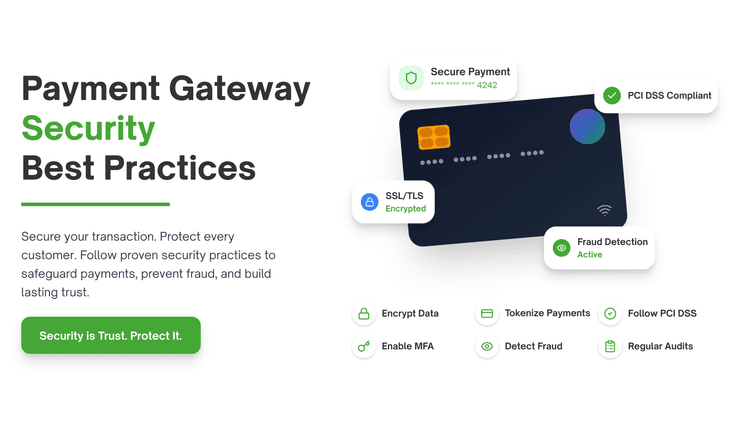
Table of Contents
Things are working. Sales are up. Customers trust you. Then a breach hits.
Payment data is exposed showing transaction failure. And suddenly, you’re dealing with chargebacks, penalties, and a trust deficit that’s hard to recover from.
Payment gateway security is the foundation your entire business sits on. Every time a customer enters their card details on your platform, they trust you with some of the most sensitive data they own.
One vulnerability in your payment flow a misconfigured API, an outdated library, an unencrypted data field is all it takes for that trust to shatter completely.
The scary part? Most breaches don't happen because of sophisticated nation-state attacks. They happen because of preventable oversights that the right developer would have caught.
This blog breaks down why payment gateway vulnerabilities happen, how to fix them, and how QuickHire gets you the right security-focused developer before a breach becomes your problem.
Why Payment Gateway Security Fails: The Root Causes
1. Poor API Key Management
Payment gateways like Stripe, Razorpay, and PayPal communicate through API keys. When these keys are hardcoded into source code, pushed to public GitHub repositories, or stored without encryption, attackers don't need to hack anything they just need to look.
2. Missing or Weak SSL/TLS Implementation
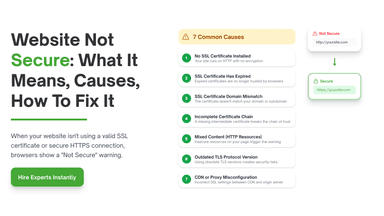
If your payment pages aren't enforcing HTTPS at every layer, data transmitted between your customer's browser and your server is exposed. Expired certificates, weak cipher suites, or mixed-content pages are all open doors for man-in-the-middle attacks.
3. Skipping PCI-DSS Compliance Requirements
PCI-DSS (Payment Card Industry Data Security Standard) exists for a reason. Businesses that skip compliance either out of ignorance or to cut corners expose themselves to massive fines and liability when breaches occur. Compliance isn't just paperwork; it's a security framework.
4. Outdated Payment Libraries and SDKs
Using an older version of a payment SDK that has known vulnerabilities is one of the most common and avoidable causes of payment security failures. Attackers actively scan for outdated dependencies.
5. Insufficient Input Validation
Without proper input validation on payment forms, your gateway becomes vulnerable to SQL injection, cross-site scripting (XSS), and form manipulation attacks where amounts or transaction details get altered before processing.
6. Storing Sensitive Cardholder Data Unnecessarily
Some businesses store raw card data CVVs, full card numbers in their databases out of convenience. This is not just a bad practice; it's a direct PCI-DSS violation and an enormous liability waiting to happen.
7. Weak Authentication on Admin and Payment Panels
If your payment dashboard or backend admin panel is protected by a simple username and password no MFA, no IP whitelisting, no session controls. You are one credential leak away from a catastrophic breach.
The Real Cost of Getting This Wrong
The consequences of payment gateway vulnerabilities extend far beyond a technical incident:
Financial loss -chargebacks, fraud liability, and regulatory fines can run into crores
Legal exposure -GDPR, PCI-DSS, and RBI guidelines carry serious penalties for non-compliance
Loss of payment processor access-Stripe, Razorpay, and others can suspend accounts for security violations
Reputational damage-one headline about a data breach follows your brand for years
Customer churn -60% of customers stop doing business with a company after a breach
Security is not just an IT problem. It's a business survival problem.
Best Practices: How to Secure Your Payment Gateway the Right Way
1. Never Handle Raw Card Data- Use Tokenization
Let your payment provider handle the sensitive data. Tools like Stripe.js or Razorpay's checkout embed handle card capture client-side and replace raw data with tokens before it ever touches your server. Your system never sees the actual card number.
2. Enforce HTTPS Everywhere, Not Just on Checkout Pages
Every page that leads to or interacts with your payment flow must be served over HTTPS. Implement HTTP Strict Transport Security (HSTS) headers. Audit your SSL certificate regularly and ensure strong TLS 1.2+ cipher suites are in use.
3. Store API Keys and Secrets in Environment Variables
Never hardcode API keys in your codebase. Use environment variables, secrets managers like AWS Secrets Manager or HashiCorp Vault, and rotate keys regularly. Audit your Git history exposed keys from old commits are still a live risk.
4. Implement Webhook Signature Verification
When your payment gateway sends a webhook (for payment confirmations, refunds, disputes), always verify the signature. Without this, an attacker can send fake webhook events to trigger fraudulent order fulfillments.
5. Enable Multi-Factor Authentication on All Payment Panels
Your payment dashboard, admin panel, and any system with access to financial data must enforce MFA. Combine this with IP whitelisting and session timeout policies.
6. Keep Dependencies and SDKs Updated
Audit your payment-related packages regularly using tools like npm audit, pip check, or Dependabot. A known vulnerability in an outdated library is a gift to attackers.
7. Implement Rate Limiting and Fraud Detection
Brute force attacks on card inputs, credential stuffing, and carding attacks are common. Rate limit your payment endpoints, integrate fraud detection tools like Stripe Radar or Razorpay's fraud shield, and monitor unusual transaction patterns.
8. Conduct Regular Security Audits and Penetration Testing
Don't wait for a breach to discover your vulnerabilities. Schedule regular code audits and pen tests specifically focused on your payment flow. A skilled security developer reviewing your implementation can catch issues your automated tools miss.
9. Log Everything But Log It Safely
Maintain detailed logs of all payment events, errors, and access attempts. These are essential for incident response. However, ensure logs never capture sensitive data like card numbers, CVVs, or raw API responses containing cardholder information.
10. Follow PCI-DSS Guidelines Religiously
Whether you're SAQ-A or SAQ-D compliant, understand which PCI-DSS tier applies to your business and implement the required controls. If you're unsure, a qualified security developer or a QSA (Qualified Security Assessor) can guide you through the requirements.
How QuickHire Gets You the Right Developer -Fast
Here's the honest reality: implementing payment gateway security correctly requires specialized knowledge. It's not something you hand off to a general-purpose developer and hope for the best. A wrong configuration in your Stripe webhook handler or a missing validation check in your payment API can cost you everything.
Most businesses discover this too late either when a breach happens or when a compliance audit flags critical gaps.
QuickHire solves this before it becomes a crisis.
Tell Us What You Need
Security audit of your payment flow? Integration of a new payment gateway with best practices baked in? Emergency response to a suspected breach? Just tell QuickHire, it takes two minutes to describe your requirement.
Get Matched to a Payment Security Specialist in 10 Minutes
QuickHire's talent pool includes developers with deep expertise in payment integrations -Stripe, Razorpay, PayPal, Cashfree, PayU, and more as well as security-focused engineers who understand PCI-DSS, tokenization architecture, and secure API design. Explore our VAPT services and cybersecurity support, available in 4-hour or 8-hour sessions.
Developer Is Live in Your Codebase Within Minutes
No lengthy interviews. No onboarding delays. Your matched developer gets to work immediately -reviewing your implementation, identifying vulnerabilities, and building the right fixes with security-first thinking.
Fully Vetted, NDA-Protected Professionals
Handing a developer access to your payment infrastructure requires absolute trust. Every QuickHire developer is rigorously screened and operates under strict confidentiality agreements. Your financial systems and customer data stay protected.
Pay Only for What You Use
Whether you need a 3-hour security audit or a 2-week integration project, QuickHire works on flexible terms. No retainers, no long contracts, just expert help, priced fairly for exactly what you need.
Don't Leave Your Payment Gateway Exposed
One vulnerability is all it takes. Get a payment security expert on your side -right now. → Hire a Payment Security Developer on QuickHire. Matched in 10 minutes, guaranteed.
Conclusion
The threat landscape evolves constantly, and attackers are always looking for the weakest link in your payment flow. Tokenization, HTTPS enforcement, proper API key management, PCI-DSS compliance, and regular audits are not optional layers. They are the baseline.
But knowing best practices is only half the battle. Implementing them correctly in your specific stack, with your specific gateway, under your specific compliance requirements, is where expert developer knowledge makes all the difference.
Don't wait for a breach to take payment security seriously. The cost of prevention is a fraction of the cost of recovery.
Frequently Asked Questions
Q1. Do I need a developer to make my payment gateway secure, or can I do it myself?
Basic steps like enabling HTTPS and using a hosted checkout can be self-managed. But for API security, webhook verification, PCI-DSS compliance, and vulnerability auditing, you need a developer with specific expertise. Getting this wrong has serious consequences.
Q2. Which payment gateways are the most secure for Indian businesses?
Razorpay, Cashfree, and PayU are all PCI-DSS compliant and widely trusted in India. The gateway itself being secure doesn't mean your integration is how your developers implement and configure it matters enormously.
Q3. What is tokenization and why does it matter?
Tokenization replaces sensitive card data with a randomly generated token that has no exploitable value on its own. It means your servers never store or transmit actual card numbers, dramatically reducing your exposure in the event of a breach.
Q4. How often should I audit my payment gateway security?
At minimum, conduct a security review after every major update to your payment flow, every third-party SDK upgrade, and at least once every six months as a scheduled audit regardless of whether you've made changes.
Q5. What's the difference between PCI-DSS SAQ-A and SAQ-D compliance?
SAQ-A applies to merchants who fully outsource card processing to a compliant third party and never handle card data directly. SAQ-D applies to those who store, process, or transmit cardholder data themselves. Most e-commerce businesses using hosted checkouts fall under SAQ-A.