The Cloud Bill Spiked Overnight
Your cloud bill spiked overnight, and finance is asking why. Here's why cloud costs spike without warning, and how to find the cause fast.
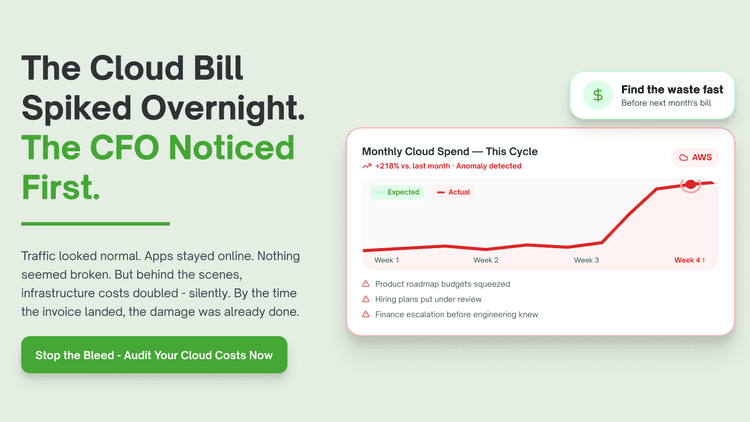
Your cloud bill spiked overnight. You didn't deploy anything new. Your finance team wants answers you don't have yet.
This happens across custom stacks more than teams admit. Cloud pricing models reward complexity that nobody tracks closely. Most spikes trace back to something small that scaled silently.
Top custom stack cloud cost issues and how to resolve them
A single service quietly scaled past your expectations
You open your billing dashboard Monday morning. The number looks wrong. Nothing in your deploy log explains it.
What is happening: Auto scaling kicked in during a traffic spike. It never scaled back down. You're paying for capacity you no longer need.
What most stores miss: Most teams set scaling triggers once and never review them. Scale down rules get skipped far more often than scale up rules.
Business impact: Idle compute capacity running for days can add thousands to a single monthly bill.
Industry trend: According to the Flexera State of the Cloud report, wasted cloud spend remains one of the top concerns for IT leaders.
How to fix it:
Set scale down policies with the same urgency as scale up policies.
Review auto scaling groups weekly in AWS or GCP console.
Add billing alerts tied to compute hours, not just total spend.
And the worst part? You had no warning. The meter just kept running.
This is the step most teams skip. Forward pull: Compute isn't the only place costs creep up quietly.
Data transfer charges you never accounted for
What is happening: Your architecture moves data between regions or services constantly. Each transfer carries a small fee. Those fees added up fast.
What nobody tells you is this: Most teams price compute and storage carefully. Data transfer between services rarely gets the same attention.
Business impact: Cross region or cross service data transfer can quietly become a large percentage of your total bill.
Industry trend: Research suggests data egress fees are among the least understood line items on enterprise cloud invoices.
How to fix it:
Map your architecture and flag every cross region data flow.
Move tightly coupled services into the same region or availability zone.
Use AWS Cost Explorer or GCP's billing reports to isolate transfer costs.
Nobody tells you this upfront. You find out when finance asks questions.
Forward pull: Sometimes the spike isn't about data movement at all. It's about what you forgot to turn off.
Orphaned resources are running and nobody noticed
You open your billing dashboard Monday morning. Costs climbed steadily for weeks. No new project explains the increase.
What is happening: A test environment from months ago is still running. Old snapshots and unused volumes sit there too. Nobody decommissioned any of it.
What most stores miss: Most teams clean up resources right after a project ends. Forgotten environments from old projects rarely get audited later.
Business impact: Orphaned resources can run for months, adding steady cost with zero business value.
Industry trend: According to Flexera's cloud waste research, unused or idle resources account for a significant share of wasted cloud spend.
How to fix it:
Run an inventory audit using AWS Trusted Advisor or GCP Recommender.
Tag every resource with an owner and an expiration date.
Schedule a monthly cleanup review for unused volumes and snapshots.
That is the part that actually hurts. The waste sat there in plain sight.
Forward pull: Even clean infrastructure can spike from one specific source most teams overlook.
A single misconfigured query is hammering your database service
What is happening: A managed database service bills by usage, not a flat rate. One inefficient query runs constantly. The cost scales with every execution.
What most stores miss: Most teams monitor application performance closely. Few connect database query inefficiency directly to a rising cloud bill.
Business impact: An unoptimized query running thousands of times daily can quietly become your largest single cost driver.
Industry trend: AWS's own cost optimization documentation specifically flags inefficient queries as a common cause of unexpected RDS or DynamoDB charges.
How to fix it:
Review your slowest and most frequent queries using your database's built in profiler.
Add indexes or caching to reduce repeated execution costs.
Set budget alerts specifically on database service spend.
Most developers know this. Most do not fix it.
Forward pull: Some cost spikes come from inside your own code, not your infrastructure choices.
A logging or monitoring tool is generating more data than you think
What is happening: Verbose logging captures every request detail by default. Storage and processing costs scale with log volume. Nobody set a limit.
What nobody tells you is this: Most teams enable detailed logging during debugging and forget to scale it back. Logging costs compound silently over time.
Business impact: Excessive log retention can cost more than the infrastructure it's monitoring.
Industry trend: Research suggests observability spend has grown faster than core infrastructure spend across many engineering organizations.
How to fix it:
Set log retention policies that match actual compliance needs.
Sample verbose logs instead of capturing every single request.
Review your Datadog or CloudWatch usage tier against actual need.
It sounds obvious. Almost nobody does it.
Forward pull: Even with logging under control, a third-party service can still surprise you.
A third-party service changed its pricing tier without clear warning
What is happening: A managed service you depend on crossed a usage threshold. The pricing tier changed automatically. Your bill reflects a new rate nobody approved.
What most stores miss: Most teams review pricing at signup. Usage based pricing tiers change automatically as you scale, often without a direct alert.
Business impact: Crossing a pricing tier silently can multiply a single line item overnight.
Industry trend: According to multiple SaaS pricing analyses, usage based tier changes are a common source of unexpected enterprise billing surprises.
How to fix it:
Review the pricing documentation for every usage based service you use.
Set usage alerts below each known pricing tier threshold.
Negotiate flat rate pricing once you predict consistent volume.
This is the step most teams skip. Tier changes hide in fine print.
Forward pull: Even with pricing understood, finding the actual cause fast still takes the right person.
Nobody on your team can read the bill fast enough
What is happening: Your cloud invoice lists hundreds of line items. The spike could be any of them. Hours pass before anyone narrows it down.
What nobody tells you is this: Most teams have engineers who build infrastructure. Few have someone who specializes in reading cost data fast.
Business impact: Every day spent investigating a spike is another day of cost accumulating at the same rate.
Industry trend: According to the Flexera State of the Cloud report, cost visibility remains one of the top challenges cited by IT leaders.
How to fix it:
Build a cost allocation tag structure before you need to investigate anything.
Use a tool like CloudHealth or native cost explorer dashboards weekly.
Bring in a cost specialist who can isolate spikes fast when finance asks.
Nobody tells you this upfront. By the time you find the cause, the bill already arrived.
The real problem behind all of these issues
Every issue above traces back to the same gap. Cloud infrastructure grows faster than anyone's ability to track its cost. Custom stacks make this worse because every architecture decision adds another variable. The fix isn't cutting services blindly. It's finding the cause fast with the right expertise.
How QuickHire fixes this
When your cloud bill spikes without explanation, you need a cloud cost specialist who has audited infrastructure spend before. QuickHire connects you in minutes. Traditional hiring takes weeks. QuickHire offers cloud support and cost review on demand, with a Project Manager assigned within 10 minutes.
You pay for what you use. No salary. No contract. A specialist can trace the spike to the exact service, recommend a fix, and set up alerts so it doesn't repeat.
This isn't about replacing your engineering team. It's about adding cost visibility exactly when you need it.
Conclusion: Cloud bills will keep spiking without warning. The right specialist can find the cause in hours, not weeks. Hire a vetted custom stack expert on QuickHire today. No contracts. No wait.
Frequently asked questions
Why did my cloud bill spike overnight with no new deployments?
Common causes include auto scaling that never scaled back down, orphaned resources, or a pricing tier change. Check your billing dashboard's usage breakdown by service first.
How do I find which service caused my cloud cost spike?
Use AWS Cost Explorer or GCP's billing reports to break costs down by service and date. Compare against your deployment history to rule out new releases.
Can a database query really cause a cloud bill spike?
Yes, inefficient queries on usage based database services can scale cost with every execution. Profiling tools can isolate the exact query responsible.
How can I prevent unexpected cloud cost spikes in the future?
Set billing alerts below known thresholds, tag every resource with an owner, and review auto scaling policies regularly. QuickHire can connect you with a specialist to audit your setup before it spikes again.
Who should I call when finance asks why the cloud bill spiked?
Bring in a cloud cost specialist immediately rather than guessing at the cause. QuickHire connects you with a vetted expert who can trace the spike within minutes.