How to Hire Mobile App Developers: A Complete Guide for 2026
Looking to hire mobile app developers in 2026? This comprehensive guide walks you through defining your project scope, evaluating technical and soft skills, choosing the right engagement model, and using a proven screening framework to build a high-performing development team.
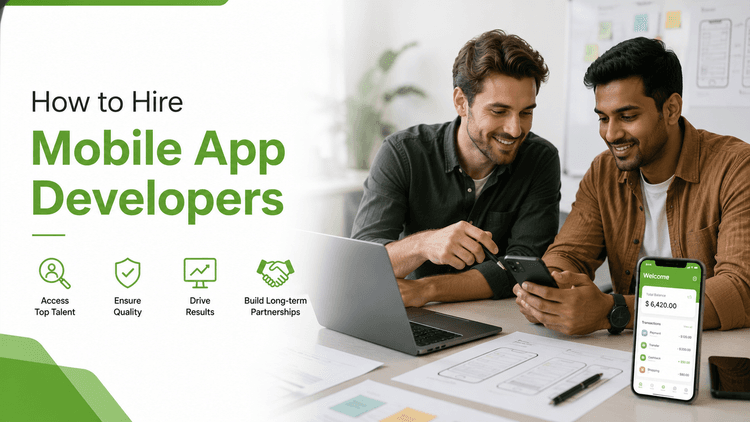
Table of Contents
The demand for mobile applications has never been higher. Whether you're a startup launching your first product or an enterprise expanding its digital ecosystem, knowing how to hire mobile app developers the right way can mean the difference between a thriving product and a costly failure.
The global mobile app development market is projected to exceed $583 billion, and competition for skilled talent is fierce. This guide walks you through every critical step, from defining your project requirements to finalizing contracts, so you can build a winning team with confidence. If you're looking for pre-vetted professionals, explore our talent marketplace to get started immediately.
Why It Matters: The Real Cost of Hiring the Wrong Mobile App Developer
Before you hire mobile app developers, it's worth understanding the financial stakes. A mismatched hire doesn't just slow your project; it derails timelines, inflates budgets, and damages user trust.
The app development costs for a mid-complexity application range from $30,000 to $150,000. Choosing the wrong developer can double or even triple that figure through rework, missed deadlines, and technical debt.
The cost to hire an app developer is not just their hourly rate; it includes onboarding time, management overhead, and the opportunity cost of a delayed launch. Understanding this equation upfront is essential for any business serious about mobile.
Define Your Project Scope Before Hiring
The most overlooked step in the hiring process is clarity. Many companies rush to post a job description without first mapping out exactly what they need.
What platforms do you need:
iOS, Android, or both?
Do you require React Native for cross-platform development or native code for performance-critical apps?
What is your timeline?
What does success look like at 30, 60, and 90 days?
A detailed job description that answers these questions will attract candidates who genuinely fit your requirements and repel those who don't, saving you hours of screening time.
Where to Find Qualified Mobile App Developers for Hire ?
Finding a skilled mobile app developer requires knowing where to look. Your sourcing strategy should align with your budget, timeline, and technical complexity:
Freelance platforms: Toptal, Upwork, and Fiverr Pro offer access to global talent pools, suitable for smaller projects or augmenting existing teams.
Staffing marketplaces: Platforms like QuickHire specialize in pre-vetted mobile app developer profiles, significantly reducing your screening time.
Development agencies: Ideal for end-to-end custom mobile app development, agencies bring full teams including designers, QA, and project managers.
LinkedIn & GitHub: Excellent for sourcing senior talent who may not be actively job-hunting but are open to compelling opportunities.
For a deeper look at industry hiring trends and what top businesses are doing differently, visit QuickHire's Industry Perspectives.
Technical Skills to Evaluate When Hiring for Mobile App Development
When assessing candidates for mobile app development, technical depth matters. Here are the core competencies to evaluate:
Platform expertise: Swift and Objective-C for iOS; Kotlin and Java for Android; JavaScript with React Native for cross-platform.
API integration: Proficiency in RESTful APIs, GraphQL, and third-party service integration is non-negotiable for most modern apps.
Custom mobile app development: Experience with custom mobile app development projects indicates the ability to build from scratch rather than just modifying templates.
Performance optimization: The ability to fine-tune app performance for speed, battery efficiency, and crash reduction.
Security awareness: Understanding data encryption, OAuth, and secure API handling is critical for fintech, health, and enterprise apps.
Conduct technical assessments using take-home tasks or pair programming sessions to validate these skills in practice, not just on paper.
Don't Overlook Soft Skills and Cultural Fit
Technical ability will get a mobile app developer into the interview, but soft skills determine whether they thrive in your team. Communication, adaptability, and problem-solving are as important as any coding language. A developer who can clearly articulate technical decisions to non-technical stakeholders will save you countless hours of misalignment. Look for evidence of:
Proactive communication and willingness to flag blockers early
Collaboration in cross-functional teams with designers, PMs, and QA engineers
A growth mindset evidenced by continuous learning, open-source contributions, or side projects
Strong soft skills are the invisible infrastructure of high-performing mobile development teams. Candidates who score well technically but show red flags around communication or accountability will create friction at scale.
Assess Their Approach to User Experience
A great mobile app is built around its users. When interviewing developers, probe their understanding of user experience (UX) principles. Do they actively advocate for the end-user during development decisions? Have they worked closely with UX designers or conducted usability testing? The best developers in mobile development understand that clean code means nothing if the app is confusing or slow. Ask to review apps they've built and evaluate the user experience directly load times, navigation flow, accessibility, and visual consistency all tell a story about the developer's standards and attention to detail.
Structuring the Engagement: Freelancer vs. Agency vs. In-House
Your engagement model shapes your costs, speed, and control. Here's how the three main options compare for custom mobile app development:
Freelancers: Lower hourly rates, high flexibility, but require active management. Best for defined, short-term scopes.
Agencies: Higher upfront investment, but agencies manage their own teams and deliver end-to-end mobile app development. Suitable for complex, long-term builds.
In-house developers: Maximum control and team cohesion. Higher fixed costs, but ideal if mobile is a core, ongoing business function.
Most growing businesses find a hybrid model most effective in-house lead supported by contract specialists sourced through a platform like QuickHire.
How to Hire Mobile App Developers: Screening and Interview Framework
A structured hiring process reduces bias and improves outcomes. Use this proven framework when you hire mobile app developers:
Step 1 – Portfolio review: Examine past apps for complexity, code quality (via GitHub), and platform diversity.
Step 2 – Technical screening: Use a timed assessment relevant to your tech stack. For react native roles, include a component-building or state-management task.
Step 3 – System design interview: Ask candidates to architect a feature or full app from scratch; this reveals their thinking process.
Step 4 – Soft skills interview: Scenario-based questions such as: "Tell me about a time you disagreed with a PM on a product decision. How did you handle it?"
Step 5 – Reference checks: Speak with former clients or employers to validate the candidate's reliability, communication, and output quality.
Final Thoughts
The ability to hire mobile app developers who align with your technical requirements, timeline, budget, and culture is one of the most valuable skills a business leader can develop in the current digital economy.
By taking a structured approach, defining your scope, evaluating both hard and soft skills, assessing user experience sensibilities, and choosing the right engagement model, you dramatically increase your chances of delivering a product that users love and that drives real business results.
Whether you're commissioning your first app or scaling an existing platform, the principles in this guide will help you make smarter, faster, and more confident hiring decisions.